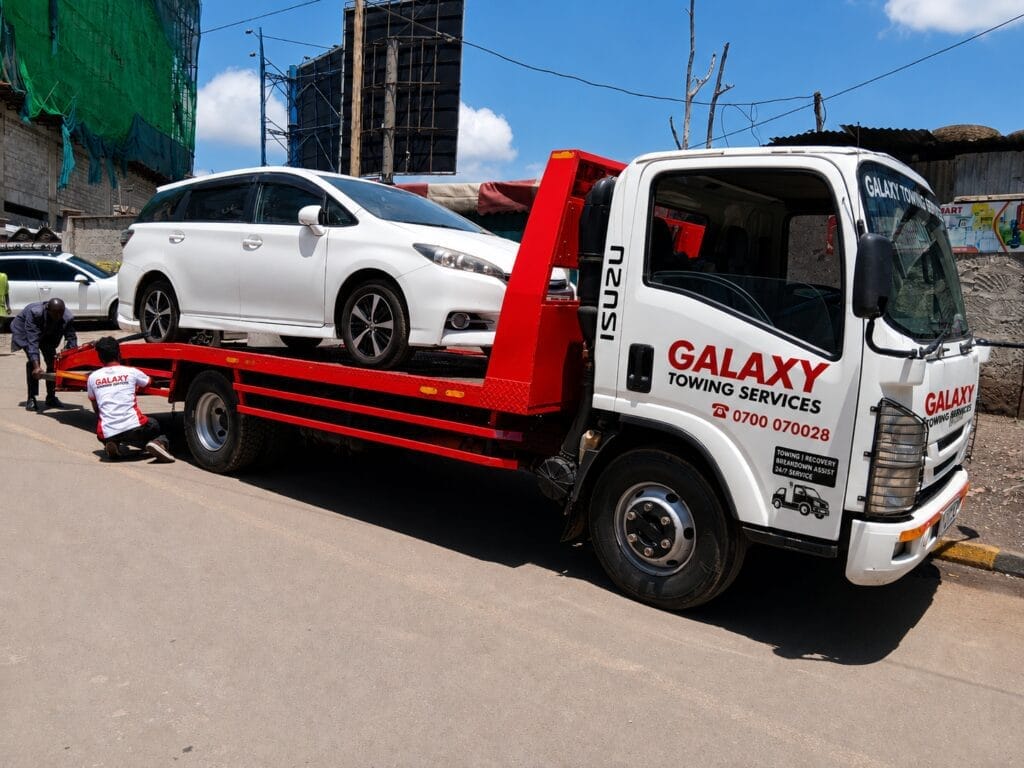
The cost of towing services in Nairobi can vary depending on several factors such as distance, type of vehicle, and the towing company used. Here is a general overview of towing truck charges in Nairobi:
Base Fee: Most towing companies charge a base fee which typically ranges from KES 4,000 to KES 15,000. This fee covers the initial hook-up and short distance towing.
Per Kilometer Charge: After the base fee, there is usually a per kilometer charge for the distance covered. This can range from KES 150 to KES 300 per km depending on the company and the type of vehicle.
Type of Vehicle: Larger vehicles such as trucks or buses may attract higher towing fees compared to standard cars due to the extra equipment and effort required.
Emergency or After-Hours Service: If you require towing during late hours, weekends, or public holidays, expect additional charges which can increase the total cost by 20% to 50%.
Additional Services: Some towing companies offer extra services like roadside assistance, vehicle recovery from ditch or mud, and long-distance towing which will incur additional fees.
Estimated Example Costs:
Short distance towing (within 5 km): KES 4,500 – KES 6,000
Medium distance towing (5 km to 20 km): KES 4,000 – KES 10,000
Long distance towing (20 km and above): KES 10,000 and above, depending on distance
Tips:
Always confirm the pricing before hiring a towing service.
For SUVs, Pick-ups, and Light Trucks (below 2 tons)
Distance
All-Inclusive Price (KES)
0 – 10 KM
6,500
10 – 20 KM
9,500
20 – 30 KM
12,500
30 – 40 KM
15,500
40 – 50 KM
17,500
Frequently Asked Questions About Towing Truck Charges in Nairobi
1. How much does a standard tow cost in Nairobi?
Towing charges in Nairobi vary depending on the distance, the size of the vehicle, and the time of day. On average, a standard city-center tow for a saloon car ranges from KES 3,500 to KES 7,000 for short distances. Long-distance towing is usually charged per kilometer, typically ranging from KES 100 to KES 200 per extra kilometer outside the standard base zone.
2. What factors determine the overall towing fee?
Several factors influence the final cost of towing a vehicle in Nairobi:
Vehicle Size and Weight: SUVs, heavy pick-ups, and trucks cost more to tow than smaller saloon cars or hatchbacks.
Distance: Base fees usually cover a specific radius (e.g., 5 to 10 kilometers). Anything beyond that incurs an extra per-kilometer charge.
Time of Day: Emergency towing services during odd hours, late nights, weekends, or public holidays often attract higher rates.
Condition of the Vehicle: If the car has locked steering, missing wheels, or is stuck in a ditch (requiring winch recovery or a flatbed), the extra labor will increase the cost.
3. Is flatbed towing more expensive than hook-and-chain towing?
Yes, flatbed towing is generally more expensive, but it is much safer for your vehicle—especially for modern cars, automatic transmissions, and four-wheel drives (4WDs). Hook-and-chain or wheel-lift towing is cheaper but carries a higher risk of damaging the bumper or transmission system over long distances.
4. Are there extra charges for night-time or emergency towing?
Yes. Most towing companies in Nairobi operate 24/7, but services rendered between 10:00 PM and 6:00 AM, or during severe weather conditions, often include a night surcharge of KES 1,000 to KES 3,000 on top of the standard rate.
5. Does car insurance cover towing charges in Kenya?
It depends on your insurance policy. Comprehensive car insurance policies often include free or subsidized emergency towing and rescue services up to a certain limit per year. Always check your policy document or call your insurance provider before hiring a private towing service to see if they have a preferred partner.
6. How do I pay for towing services in Nairobi?
Most professional towing services in Nairobi accept mobile money (M-Pesa), bank transfers, and cash. It is always advisable to confirm the payment methods accepted by the provider before they dispatch the truck.
7. What should I check before the towing truck loads my car?
To avoid disputes regarding vehicle damage, ensure you do the following:
Take clear photos and videos of your car from all angles before it is loaded.
Remove all valuable items, electronics, and documents from the vehicle.
Confirm the exact total cost (including any potential hidden fees) before the truck moves.
Ensure you get a receipt or job card confirming the pickup location and destination.